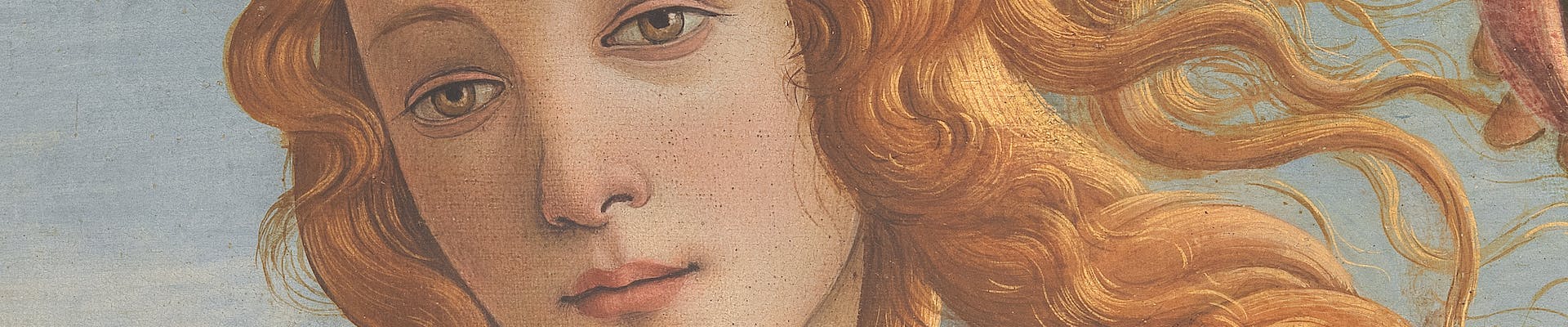
Imagines 13


New additions for Francesco Conti, draughtsman: a study of a private collection, and one of Gabinetto Disegni e Stampe (Department of Prints and Drawings) at the Uffizi
Federico Berti
This study deals with some new developments relating to the graphic work of the Florentine painter Francesco Conti (1682-1760), who was trained in Rome and was later successfully and diligently active in his native city under the protective wing of the Riccardi Marquesses. To date, not much of Conti’s drawing output has been recovered; the approximately twenty specimens conserved at the Biblioteca Riccardiana are nearly all that are known. The additional group of three drawings presented in this paper, differing greatly in technical terms from the painterly character and abundant Venetian influences in the majority of Riccardi’s drawings, might be connected to the artist’s activity, begun in his fourth decade, as master at Pubblica Scuola del Disegno (Department of Prints and Drawings) at the Uffizi.


The rediscovery of the Max Reich Archaeological Collection at the Uffizi
Ylenia Carbonari
During the Second World War and the years immediately thereafter, Europe’s cultural assets saw numerous episodes of theft and concealment. However, for some years now, European museums have finally proved to be more sensitive to the issue of the heritage hidden or lost during that time. The research on the Max Reich archaeological collection held in storage at the Uffizi Galleries is part of this process of recovering awareness of the origins of the institution’s own collections. Coming to Florence in 1950, the collection – currently undiscovered and unshown for more than 70 years – was intentionally set aside and forgotten, thereby allowing any trace of the legitimate owner, and even his name, to be lost. Today, after two years of archival research, we can now reconstruct the collection’s history, give a name and face to its creator, and find out about those responsible for its concealment.


On the first portraits of the Habsburg-Lorraine family that reached Florence, and on Gabriele Mattei, who painted them
Giusi Fusco
Six portraits are held in the Uffizi Galleries’ storage facilities as isolated works depicting figures of uncertain identification. Archival research has reconstructed their conservation history, restoring their original serial composition and allowing them to be recognized as likenesses depicting the new Grand Dukes and their families, painted between 1737 and 1738 upon the crown’s passing from the Medicis to the Dukes of Lorraine. In Florence, these were to provide the earliest testimony of the features of the sovereigns who were to reside in Vienna, as well as of the cosmopolitan taste in vogue in the imperial city; they were in fact painted there, following the models of Martin van Meytens the Younger, by the little-known Gabriele Mattei, a Roman artist about whom new investigative findings are provided.


A sculpture at the Uffizi Galleries of a woman making an offering. Some considerations on an Augustan-Age female iconographic model
Fabrizio Paolucci
In 2019, the Uffizi Galleries purchased, from the Pandolfini Casa d’aste auction house, a sculpture of a woman making an offering, dating to the Early Imperial period and originally part of the 18th-century furnishings at Villa Pianciani in Spoleto. The statue – which shows a convincing parallel with an Augustan-Age sculpture from Narona – offers an interesting case of female garments also known from other Early Imperial Age works depicting women in prayer or shown in the act of celebrating or participating in religious rituals. By the 2nd century AD, this apparel, which had started out as generically signifying a female figure in a context linked to the divine, ended up being used exclusively to depict the Nova Nupta in dextrarum iunctio scenes.


A previously unknown sculpture of Aphrodite from the Milanese archaeological collections: new points for reflection upon the Anadyomène type
Davide Roselli
The rediscovery in the Milanese Superintendence’s storage facilities of a Roman sculpture depicting an Aphrodite Anadyomène has provided a double opportunity for study. On the one hand, logic requires restoring to this work the space it deserves in the city’s collections, while placing it at the centre of an initial analytic interpretation; on the on the other hand, the possibility arises of being able to broach a topic as complex as the genesis and development of the iconography of the “goddess rising from the sea.” As is often the case, the dialogue between textual sources and archaeological and historical-artistic testimony is the only key for being able to interpret a work whose collection and excavation history is wholly undocumented


Giuseppe Zocchi and his Views of Florence
Fabio Sottili
This article recounts the phases in the gestation of the renowned Views of Florence done by the Florentine painter Giuseppe Zocchi (1716-1767). While during his career Zocchi dealt mainly with decoration and frescoes and with making models for the Galleria dei Lavori workshop, he owes his fame to his work as a vedutista, having immortalized the great Grand Ducal capital – a mandatory stop on the Grand Tour – in the mid-18th century. However, given the lack of clarity with which these images were conceived, the article attempts to understand the method Giuseppe Zocchi used in order to define the perspectives and formulate the views, which were first drawn, then oil-painted, and lastly published in engravings in 1744.